


Page 34 - Agriculture_Form_3
P. 34
Agriculture for Secondary Schools


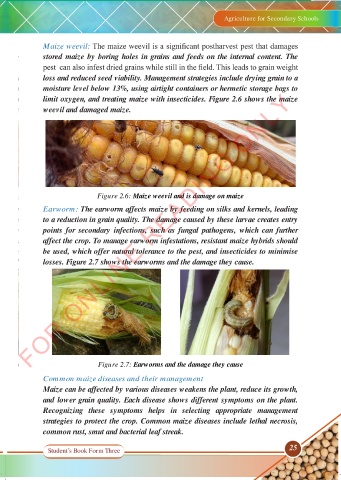
              Maize weevil: The maize weevil is a significant postharvest pest that damages
              stored maize by boring holes in grains and feeds on the internal content. The
              pest  can also infest dried grains while still in the field. This leads to grain weight
              loss and reduced seed viability. Management strategies include drying grain to a
              moisture level below 13%, using airtight containers or hermetic storage bags to
          FOR ONLINE READING ONLY
              limit oxygen, and treating maize with insecticides. Figure 2.6 shows the maize
              weevil and damaged maize.


                              Figure 2.6: Maize weevil and is damage on maize
              Earworm: The earworm affects maize by feeding on silks and kernels, leading
              to a reduction in grain quality. The damage caused by these larvae creates entry
              points for secondary infections,  such as fungal pathogens, which can further
              affect the crop. To manage earworm infestations, resistant maize hybrids should
              be used, which offer natural tolerance to the pest, and insecticides to minimise
              losses. Figure 2.7 shows the earworms and the damage they cause.


                               Figure 2.7: Earworms and the damage they cause
              Common maize diseases and their management
              Maize can be affected by various diseases weakens the plant, reduce its growth,
              and lower grain quality. Each disease shows different symptoms on the plant.
              Recognizing  these  symptoms helps in  selecting  appropriate  management
              strategies to protect the crop. Common maize diseases include lethal necrosis,
              common rust, smut and bacterial leaf streak.


                Student’s Book Form Three                                                25


                                                                                            17/09/2025   14:11
     AGRICULTURE F3.indd   25
     AGRICULTURE F3.indd   25                                                               17/09/2025   14:11

