


Page 41 - Agriculture_Form_3
P. 41
Agriculture for Secondary Schools


          FOR ONLINE READING ONLY


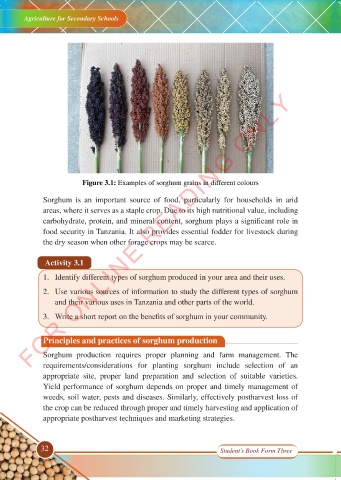
                          Figure 3.1: Examples of sorghum grains in different colours

              Sorghum is an important source of food, particularly  for households in arid
              areas, where it serves as a staple crop. Due to its high nutritional value, including
              carbohydrate, protein, and mineral content, sorghum plays a significant role in
              food security in Tanzania. It also provides essential fodder for livestock during
              the dry season when other forage crops may be scarce.


               Activity 3.1
              1.  Identify different types of sorghum produced in your area and their uses.

              2.  Use various sources of information to study the different types of sorghum
                  and their various uses in Tanzania and other parts of the world.

              3.  Write a short report on the benefits of sorghum in your community.


              Principles and practices of sorghum production

              Sorghum production requires proper planning and farm management.  The
              requirements/considerations  for  planting  sorghum  include  selection  of an
              appropriate  site,  proper land  preparation  and selection  of suitable  varieties.
              Yield performance of sorghum depends on proper and timely management of
              weeds, soil water, pests and diseases. Similarly, effectively postharvest loss of
              the crop can be reduced through proper and timely harvesting and application of
              appropriate postharvest techniques and marketing strategies.


             32                                                     Student’s Book Form Three


                                                                                            17/09/2025   14:11
     AGRICULTURE F3.indd   32                                                               17/09/2025   14:11
     AGRICULTURE F3.indd   32

