


Page 73 - Biology_Form_3
P. 73
Biology for Secondary Schools


                                            Hypothalamus

                                            Pituitary gland
                                             Thyroid gland
          FOR ONLINE READING ONLY
                                            Parathyroid gland


                                                Pancreas


                                              Adrenal gland


                                          Ovary             Testis


                           a                                               b
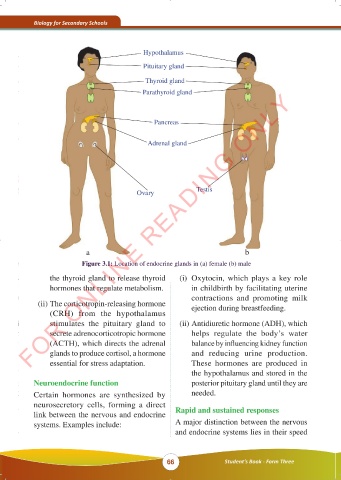
                          Figure 3.1: Location of endocrine glands in (a) female (b) male

                the thyroid gland to release thyroid   (i)  Oxytocin, which plays a key role
                hormones that regulate metabolism.         in childbirth by facilitating uterine
                                                           contractions  and  promoting  milk
             (ii) The corticotropin-releasing hormone      ejection during breastfeeding.
                (CRH) from the hypothalamus
                stimulates the pituitary gland to      (ii) Antidiuretic hormone (ADH), which
                secrete adrenocorticotropic hormone        helps  regulate  the  body’s  water
                (ACTH), which directs the adrenal          balance by influencing kidney function
                glands to produce cortisol, a hormone      and reducing urine production.
                essential for stress adaptation.           These hormones are produced in
                                                           the hypothalamus and stored in the
           Neuroendocrine function                         posterior pituitary gland until they are

           Certain hormones are synthesized by             needed.
           neurosecretory  cells,  forming  a  direct
           link between the nervous and endocrine     Rapid and sustained responses
           systems. Examples include:                 A major distinction between the nervous
                                                      and endocrine systems lies in their speed


                                                    66               Student’s Book - Form Three


                                                                                          23/10/2025   11:52:41
     BIOLOGY FORM 3 FINAL EDITED 16.09.2025.indd   66
     BIOLOGY FORM 3 FINAL EDITED 16.09.2025.indd   66 KAMISHNA                            23/10/2025   11:52:41                     KAMISHNA

