


Page 435 - Computer_Science_F5
P. 435
Computer Science  Process 1  Resource 1  Waiting  (c) No preemption: Once a process has
                                                         must request others while not holding
                                                         any. No hoarding.
               Assigned
                                         for
                to
                                                         a resource, it cannot be forcibly taken
                                          Process 2
                                                         away. No pushing in line.
          FOR ONLINE READING ONLY
                                                         within the operating system that
               Waiting                  Assigned     (d) Semaphores: These are special flags
                for        Resource 2    to              act like signals to control access to
                                                         shared resources. Semaphores work
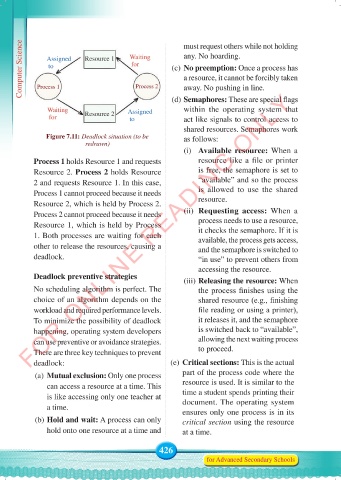
               Figure 7.11: Deadlock situation (to be    as follows:
                           redrawn)
                                                         (i)  Available resource: When a

           Process 1 holds Resource 1 and requests           resource like a file or printer
           Resource 2. Process 2 holds Resource              is free, the semaphore is set to
           2 and requests Resource 1. In this case,          “available” and so the process
           Process 1 cannot proceed because it needs         is  allowed to  use  the  shared
           Resource 2, which is held by Process 2.           resource.
           Process 2 cannot proceed because it needs     (ii)  Requesting access: When  a
           Resource 1, which is held by Process              process needs to use a resource,
                                                             it checks the semaphore. If it is
           1. Both processes are waiting for each            available, the process gets access,
           other to release the resources, causing a         and the semaphore is switched to
           deadlock.                                         “in use” to prevent others from
                                                             accessing the resource.
           Deadlock preventive strategies                (iii) Releasing the resource: When

           No scheduling algorithm is perfect. The           the process finishes using the
           choice of an algorithm depends on the             shared resource (e.g., finishing
           workload and required performance levels.         file reading or using a printer),
           To minimize the possibility of deadlock           it releases it, and the semaphore
           happening, operating system developers            is switched back to “available”,
           can use preventive or avoidance strategies.       allowing the next waiting process
           There are three key techniques to prevent         to proceed.
           deadlock:                                 (e) Critical sections: This is the actual
            (a) Mutual exclusion: Only one process      part of the process code where the
               can access a resource at a time. This    resource is used. It is similar to the
               is like accessing only one teacher at    time a student spends printing their
               a time.                                  document. The operating system
                                                        ensures only one process is in its
            (b) Hold and wait: A process can only       critical section using the resource
               hold onto one resource at a time and     at a time.


                                                 426
                                                                for Advanced Secondary Schools


     Computer Science Form 5.indd   426                                                     23/07/2024   12:34

