


Page 240 - Agriculture_Form_3
P. 240
Agriculture for Secondary Schools


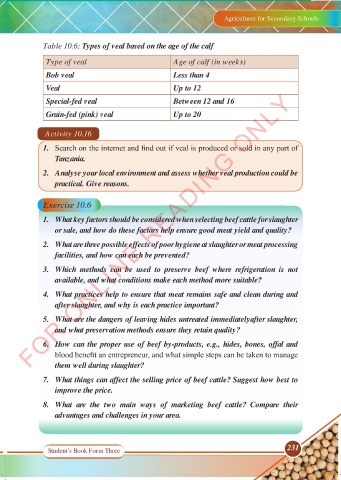
              Table 10.6: Types of veal based on the age of the calf

               Type of veal                          Age of calf (in weeks)
               Bob veal                              Less than 4

               Veal                                  Up to 12
          FOR ONLINE READING ONLY
               Special-fed veal                      Between 12 and 16

               Grain-fed (pink) veal                 Up to 20

               Activity 10.16

              1.  Search on the internet and find out if veal is produced or sold in any part of
                  Tanzania.

              2.  Analyse your local environment and assess whether veal production could be
                  practical. Give reasons.


              Exercise 10.6
              1.  What key factors should be considered when selecting beef cattle for slaughter
                  or sale, and how do these factors help ensure good meat yield and quality?

              2.  What are three possible effects of poor hygiene at slaughter or meat processing
                  facilities, and how can each be prevented?

              3.  Which methods can be used to preserve beef where refrigeration  is not
                  available, and what conditions make each method more suitable?

              4.  What practices help to ensure that meat remains safe and clean during and
                  after slaughter, and why is each practice important?
              5.  What are the dangers of leaving hides untreated immediatelyafter slaughter,
                  and what preservation methods ensure they retain quality?

              6.  How can the proper use of beef by-products, e.g., hides, bones, offal and
                  blood benefit an entrepreneur, and what simple steps can be taken to manage
                  them well during slaughter?

              7.  What things can affect the selling price of beef cattle? Suggest how best to
                  improve the price.
              8.  What  are  the  two main  ways of marketing  beef  cattle?  Compare  their
                  advantages and challenges in your area.


                Student’s Book Form Three                                               231


                                                                                            17/09/2025   14:12
     AGRICULTURE F3.indd   231                                                              17/09/2025   14:12
     AGRICULTURE F3.indd   231

