


Page 214 - Computer_Science_F5
P. 214
(b) Central Office (CO): A facility that houses the      the recipient for the
                   switching equipment and connects calls between       duration of the call.
                   local loops.                                     (d) Call termination: Once

               (c) Switching centers: Equipment that routes             the call is complete, the  Chapter Three: Advanced Computer Networks
                   calls based on the phone number dialed. They         circuit is disconnected,
          FOR ONLINE READING ONLY
                   include local exchanges, tandem switches, and        freeing up the resources.
                   international gateways.

               (d) Transmission media: Includes copper wires,      Features of PSTN
                   fiber optic cables, and microwave or satellite   (a)  Reliable and ubiquitous:
                   links that transmit voice and data signals.          PSTN offers reliable

                                                                        voice communication
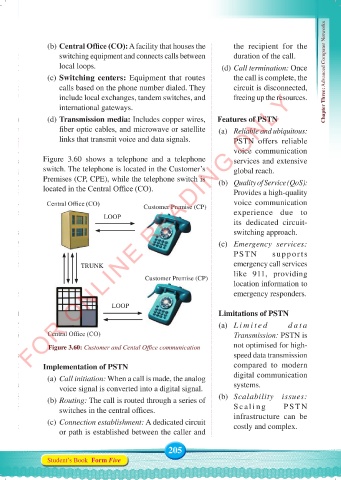
              Figure 3.60 shows a telephone  and a telephone            services and extensive
              switch. The telephone is located in the Customer’s        global reach.
              Premises (CP, CPE), while the telephone switch is    (b)  Quality of Service (QoS):
              located in the Central Office (CO).                       Provides a high-quality

               Central Office (CO)          Customer Premise (CP)       voice communication
                                LOOP                                    experience  due  to
                                                                        its dedicated circuit-
                                                                        switching approach.
                                                                   (c)  Emergency services:
                                                                        PSTN       supports
                         TRUNK                                          emergency call services
                                                                        like 911,  providing
                                             Customer Premise (CP)
                                                                        location information to
                                                                        emergency responders.

                                   LOOP
                                                                   Limitations of PSTN
                                                                   (a)  Limited         data
               Central Office (CO)                                      Transmission: PSTN is

                Figure 3.60: Customer and Cental Office communication   not optimised for high-
                                                                        speed data transmission
              Implementation of PSTN                                    compared to modern
               (a) Call initiation: When a call is made, the analog     digital communication
                   voice signal is converted into a digital signal.     systems.

               (b) Routing: The call is routed through a series of   (b)  Scalability issues:
                   switches in the central offices.                     S caling       P STN

               (c) Connection establishment: A dedicated circuit        infrastructure can be
                                                                        costly and complex.
                   or path is established between the caller and

                                                    205
               Student’s Book  Form Five


     Computer Science Form 5.indd   205                                                     23/07/2024   12:33

