


Page 216 - Agriculture_Form_3
P. 216
Agriculture for Secondary Schools


              resistance.  Young animals, pregnant animals, and those raised for fattening
              should be prioritised during deworming. Furthermore, good nutrition improves
              resistance against worms. Effective pasture management, such as rotating grazing
              areas and avoiding overcrowding, helps to limit parasite exposure. Any newly
              introduced  animal  must be dewormed before mixing  with the existing  herd.
          FOR ONLINE READING ONLY
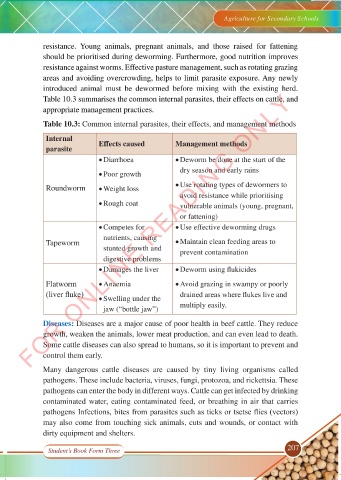
              Table 10.3 summarises the common internal parasites, their effects on cattle, and
              appropriate management practices.
              Table 10.3: Common internal parasites, their effects, and management methods

               Internal        Effects caused         Management methods
               parasite
                               • Diarrhoea            • Deworm be done at the start of the

                               • Poor growth           dry season and early rains
               Roundworm       • Weight loss          • Use rotating types of dewormers to
                                                       avoid resistance while prioritising
                               • Rough coat            vulnerable animals (young, pregnant,

                                                       or fattening)
                               • Competes for         • Use effective deworming drugs
                                nutrients, causing
               Tapeworm                               • Maintain clean feeding areas to
                                stunted growth and     prevent contamination
                                digestive problems
                               • Damages the liver    • Deworm using flukicides

               Flatworm        • Anaemia              • Avoid grazing in swampy or poorly
               (liver fluke)   • Swelling under the    drained areas where flukes live and
                                jaw (“bottle jaw”)     multiply easily.

              Diseases: Diseases are a major cause of poor health in beef cattle. They reduce
              growth, weaken the animals, lower meat production, and can even lead to death.
              Some cattle diseases can also spread to humans, so it is important to prevent and
              control them early.

              Many dangerous cattle  diseases are caused by tiny living organisms called
              pathogens. These include bacteria, viruses, fungi, protozoa, and rickettsia. These
              pathogens can enter the body in different ways. Cattle can get infected by drinking
              contaminated water, eating contaminated feed, or breathing in air that carries
              pathogens Infections, bites from parasites such as ticks or tsetse flies (vectors)
              may also come from touching sick animals, cuts and wounds, or contact with
              dirty equipment and shelters.

                Student’s Book Form Three                                               207


                                                                                            17/09/2025   14:12
     AGRICULTURE F3.indd   207                                                              17/09/2025   14:12
     AGRICULTURE F3.indd   207

