


Page 214 - Agriculture_Form_3
P. 214
Agriculture for Secondary Schools


              on the blood of the host animal, causing irritation, annoyance, wounds, and in
              some cases, transmitting serious diseases such as anaplasmosis, theileriosis and
              trypanosomiasis. The most common external parasites in beef cattle include ticks,
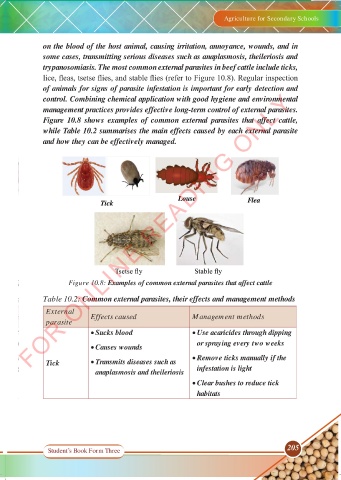
              lice, fleas, tsetse flies, and stable flies (refer to Figure 10.8). Regular inspection
              of animals for signs of parasite infestation is important for early detection and
          FOR ONLINE READING ONLY
              control. Combining chemical application with good hygiene and environmental
              management practices provides effective long-term control of external parasites.
              Figure  10.8  shows examples  of common  external  parasites  that  affect  cattle,
              while Table 10.2 summarises the main effects caused by each external parasite
              and how they can be effectively managed.


                                                       Louse
                               Tick                                         Flea


                                    Tsetse fly              Stable fly
                      Figure 10.8: Examples of common external parasites that affect cattle

              Table 10.2: Common external parasites, their effects and management methods

               External     Effects caused                 Management methods
               parasite
                            • Sucks blood                  • Use acaricides through dipping
                                                             or spraying every two weeks
                            • Causes wounds
                                                           • Remove ticks manually if the
               Tick         • Transmits diseases such as
                              anaplasmosis and theileriosis  infestation is light
                                                           • Clear bushes to reduce tick
                                                             habitats


                Student’s Book Form Three                                               205


                                                                                            17/09/2025   14:12
     AGRICULTURE F3.indd   205                                                              17/09/2025   14:12
     AGRICULTURE F3.indd   205

