


Page 215 - Agriculture_Form_3
P. 215
Agriculture for Secondary Schools


               External     Effects caused                 Management methods
               parasite
                            • Causes itching, hair loss, and  • Apply insecticidal dusts or
                              skin damage                    pour-ons
               Louse
          FOR ONLINE READING ONLY
                                                           • Improve hygiene in animal
                                                             shelters
                            • Itching                      • Treat using appropriate
                                                             insecticides
               Flea         • Skin irritation
                            • Restlessness                 • Clean,  disinfect and change
                                                             bedding regularly
                            • Transmits trypanosomiasis    • Use fly traps and screens
                            • Weakness and weight loss     • Apply insect repellents
               Tsetse fly
                                                           • Clear breeding sites around
                                                             water bodies
                            • Bites cause pain and blood   • Eliminate breeding grounds
                              loss                           (wet organic matter)
               Stable fly
                            • Reduces feeding and          • Use fly traps
                              productivity                 • Apply suitable insecticides

              Internal parasites live inside the body of cattle, mainly in the stomach, intestines,
              and blood.  These parasites interfere  with digestion and assimilation  of food,
              leading  to poor health  and reduced productivity.  The most common internal
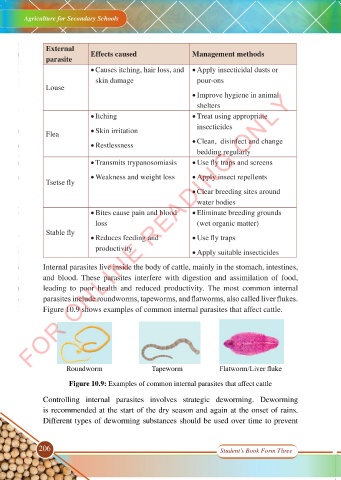
              parasites include roundworms, tapeworms, and flatworms, also called liver flukes.
              Figure 10.9 shows examples of common internal parasites that affect cattle.


                     Roundworm                 Tapeworm            Flatworm/Liver fluke

                      Figure 10.9: Examples of common internal parasites that affect cattle
              Controlling internal parasites involves strategic deworming. Deworming
              is recommended at the start of the dry season and again at the onset of rains.
              Different types of deworming substances should be used over time to prevent


             206                                                    Student’s Book Form Three


                                                                                            17/09/2025   14:12
     AGRICULTURE F3.indd   206                                                              17/09/2025   14:12
     AGRICULTURE F3.indd   206

