


Page 223 - Physics_Form_2
P. 223
Optical instruments
L lens, that is, u o . f Therefore,
o
u f f the lateral magnification of the
0 0 v e
B' Eyepiece objective lens is approximately
β
B'' B F 0 O β F e h' E taken as,
I
Objective A' 1 m = v but v f
L
FOR ONLINE READING ONLY
I 2 o f o e
L f
m f e
o
D o
A''
The real image I , formed by the
1
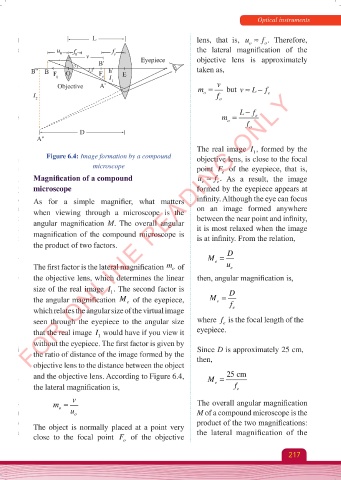
Figure 6.4: Image formation by a compound objective lens, is close to the focal
microscope point F of the eyepiece, that is,
e
Magnification of a compound u e . f As a result, the image
e
microscope formed by the eyepiece appears at
As for a simple magnifier, what matters infinity. Although the eye can focus
when viewing through a microscope is the on an image formed anywhere
angular magnification M. The overall angular between the near point and infinity,
it is most relaxed when the image
magnification of the compound microscope is is at infinity. From the relation,
the product of two factors.
M = D
e
The first factor is the lateral magnification m o of u e
the objective lens, which determines the linear then, angular magnification is,
size of the real image I . The second factor is D
1
the angular magnification M of the eyepiece, M = f
e
e
which relates the angular size of the virtual image e
seen through the eyepiece to the angular size where f is the focal length of the
e
that the real image I would have if you view it eyepiece.
1
without the eyepiece. The first factor is given by
the ratio of distance of the image formed by the Since D is approximately 25 cm,
then,
objective lens to the distance between the object
and the objective lens. According to Figure 6.4, M = 25 cm
the lateral magnification is, e f e
v
m = u The overall angular magnification
o
M of a compound microscope is the
o
product of the two magnifications:
The object is normally placed at a point very
close to the focal point F of the objective the lateral magnification of the
o
217
Physics Form 2 Final.indd 217 25/10/2025 10:28

