


Page 161 - Agriculture_Form_3
P. 161
Agriculture for Secondary Schools


              as it may hurt the animal. The procedure must be performed by trained livestock
              personnel using clean equipment. Breeding bulls must be given enough water
              and  fed  with  high-quality  grass and
              mineral  supplements.  When grazing,
              bulls  should be  closely  supervised.
          FOR ONLINE READING ONLY
              Farmers should avoid using the  same
              bull for more than two years in small                                 Nose ring
              herds.  This prevents inbreeding and
              keeps the herd strong.

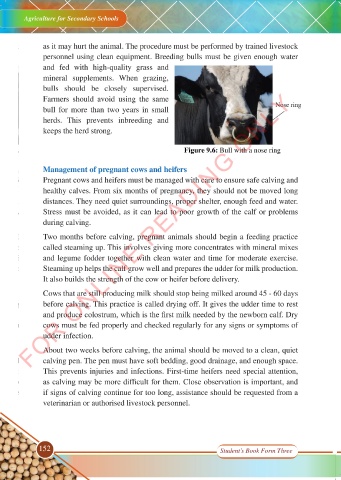
                                                         Figure 9.6: Bull with a nose ring


              Management of pregnant cows and heifers
              Pregnant cows and heifers must be managed with care to ensure safe calving and
              healthy calves. From six months of pregnancy, they should not be moved long
              distances. They need quiet surroundings, proper shelter, enough feed and water.
              Stress must be avoided, as it can lead to poor growth of the calf or problems
              during calving.

              Two months before calving, pregnant animals should begin a feeding practice
              called steaming up. This involves giving more concentrates with mineral mixes
              and legume fodder together with clean water and time for moderate exercise.
              Steaming up helps the calf grow well and prepares the udder for milk production.
              It also builds the strength of the cow or heifer before delivery.
              Cows that are still producing milk should stop being milked around 45 - 60 days
              before calving. This practice is called drying off. It gives the udder time to rest
              and produce colostrum, which is the first milk needed by the newborn calf. Dry
              cows must be fed properly and checked regularly for any signs or symptoms of
              udder infection.

              About two weeks before calving, the animal should be moved to a clean, quiet
              calving pen. The pen must have soft bedding, good drainage, and enough space.
              This prevents injuries and infections. First-time heifers need special attention,
              as calving may be more difficult for them. Close observation is important, and
              if signs of calving continue for too long, assistance should be requested from a
              veterinarian or authorised livestock personnel.


             152                                                    Student’s Book Form Three


                                                                                            17/09/2025   14:12
     AGRICULTURE F3.indd   152                                                              17/09/2025   14:12
     AGRICULTURE F3.indd   152

