


Page 162 - Agriculture_Form_3
P. 162
Agriculture for Secondary Schools


              Management during calving
              As calving approaches, the cow or heifer will show signs that they are about to
              give birth. These include swelling of the vulva, a full udder, restlessness, and
              the appearance of a water bag. The calf may also move actively inside the belly.
              Ensure the environment in the calving area is conducive for the safety of the
          FOR ONLINE READING ONLY
              mother and the calf during and after calving.
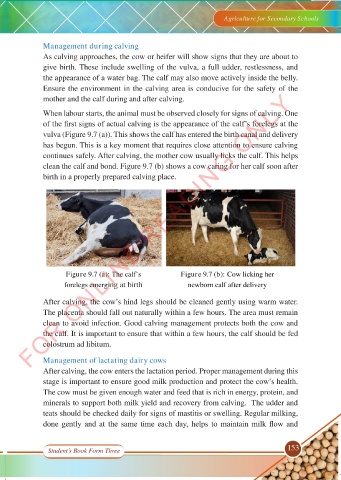
              When labour starts, the animal must be observed closely for signs of calving. One
              of the first signs of actual calving is the appearance of the calf’s forelegs at the
              vulva (Figure 9.7 (a)). This shows the calf has entered the birth canal and delivery
              has begun. This is a key moment that requires close attention to ensure calving
              continues safely. After calving, the mother cow usually licks the calf. This helps
              clean the calf and bond. Figure 9.7 (b) shows a cow caring for her calf soon after
              birth in a properly prepared calving place.


                     Figure 9.7 (a): The calf’s         Figure 9.7 (b): Cow licking her
                    forelegs emerging at birth            newborn calf after delivery

              After calving, the cow’s hind legs should be cleaned gently using warm water.
              The placenta should fall out naturally within a few hours. The area must remain
              clean to avoid infection. Good calving management protects both the cow and
              the calf. It is important to ensure that within a few hours, the calf should be fed
              colostrum ad libitum.

              Management of lactating dairy cows
              After calving, the cow enters the lactation period. Proper management during this
              stage is important to ensure good milk production and protect the cow’s health.
              The cow must be given enough water and feed that is rich in energy, protein, and
              minerals to support both milk yield and recovery from calving.  The udder and
              teats should be checked daily for signs of mastitis or swelling. Regular milking,
              done gently and at the same time each day, helps to maintain milk flow and


                Student’s Book Form Three                                               153


                                                                                            17/09/2025   14:12
     AGRICULTURE F3.indd   153                                                              17/09/2025   14:12
     AGRICULTURE F3.indd   153

