


Page 105 - Theatre_Arts_Form_5
P. 105
Theatre Arts for Advanced Secondary Schools


            and representation  performances  is on the  relationship  between  performer
            and audience.  The audience  in representational  performance take part in the
            performance as viewers and become active by either clapping hands or through
            performers who involve them once they start throwing questions or engage them
            by any other means. The interaction in the representational performance is higher
        FOR ONLINE READING ONLY
            between the performer and the performer and less between the performer and the
            audience. To say it differently, their involvement in the performance is low than it
            always is in presentational performances such as stand-up comedy. Presentational
            and representational approaches can exist together in one performance to different
            degrees. For example, one can use narration or storytelling strategy which are
            presentational performance-based stage which to a large extent is representational
            such as a play. Examples of plays that use both approaches include Ebrahim
            Hussein’s Jogoo Kijijini and Ngao ya Jadi and Penina Mhando’s Lina Ubani.
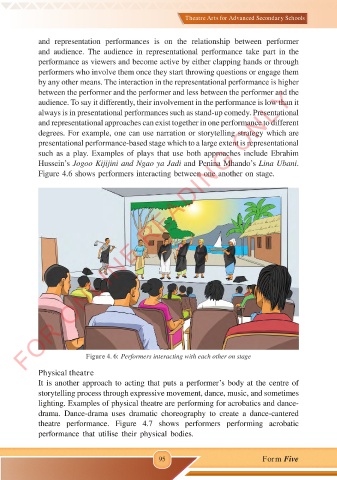
            Figure 4.6 shows performers interacting between one another on stage.


                          Figure 4. 6: Performers interacting with each other on stage

            Physical theatre
            It is another approach to acting that puts a performer’s body at the centre of
            storytelling process through expressive movement, dance, music, and sometimes
            lighting. Examples of physical theatre are performing for acrobatics and dance-
            drama.  Dance-drama  uses dramatic  choreography  to create  a dance-cantered
            theatre  performance.  Figure 4.7 shows performers performing  acrobatic
            performance  that utilise their physical bodies.


                                                95                             Form Five


                                                                                          28/06/2024   15:05
   THEATRE ART F5 fnl.indd   95                                                           28/06/2024   15:05
   THEATRE ART F5 fnl.indd   95

