


Page 150 - Agriculture_Form_3
P. 150
Agriculture for Secondary Schools


          FOR ONLINE READING ONLY


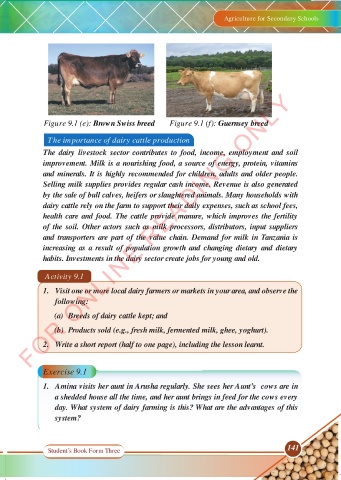
              Figure 9.1 (e): Brown Swiss breed     Figure 9.1 (f): Guernsey breed

               The importance of dairy cattle production

              The dairy livestock sector contributes to food, income, employment  and soil
              improvement. Milk is a nourishing food, a source of energy, protein, vitamins
              and minerals. It is highly recommended for children, adults and older people.
              Selling milk supplies provides regular cash income. Revenue is also generated
              by the sale of bull calves, heifers or slaughtered animals. Many households with
              dairy cattle rely on the farm to support their daily expenses, such as school fees,
              health care and food. The cattle provide manure, which improves the fertility
              of the soil. Other actors such as milk processors, distributors, input suppliers
              and transporters are part of the value chain. Demand for milk in Tanzania is
              increasing as a result of population growth and changing dietary and dietary
              habits. Investments in the dairy sector create jobs for young and old.

               Activity 9.1

              1.  Visit one or more local dairy farmers or markets in your area, and observe the
                  following:

                 (a)  Breeds of dairy cattle kept; and
                 (b)  Products sold (e.g., fresh milk, fermented milk, ghee, yoghurt).

              2.  Write a short report (half to one page), including the lesson learnt.


              Exercise 9.1

              1.  Amina visits her aunt in Arusha regularly. She sees her Aunt’s  cows are in
                  a shedded house all the time, and her aunt brings in feed for the cows every
                  day. What system of dairy farming is this? What are the advantages of this
                  system?


                Student’s Book Form Three                                               141


                                                                                            17/09/2025   14:12
     AGRICULTURE F3.indd   141                                                              17/09/2025   14:12
     AGRICULTURE F3.indd   141

