


Page 145 - Agriculture_Form_3
P. 145
Agriculture for Secondary Schools


              In some cases, especially  with long-duration  varieties  that mature  gradually,
              harvesting is done by hand-picking of only the dry mature pods. This selective
              method allows the plant to continue flowering and producing more pods. Several
              harvests may be made from the same plant over time. While this method may
              increase total yield, it requires more labour and close monitoring of the crop.
          FOR ONLINE READING ONLY
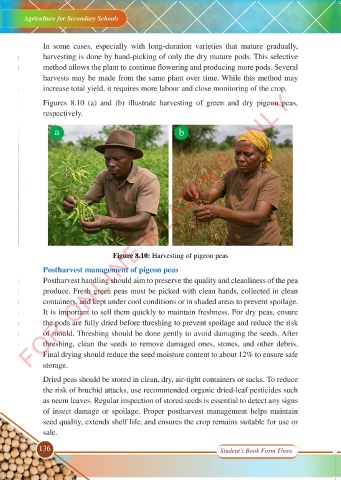
              Figures 8.10 (a) and (b) illustrate  harvesting of green and dry pigeon peas,
              respectively.


                  a                                    b


                                   Figure 8.10: Harvesting of pigeon peas

              Postharvest management of pigeon peas
              Postharvest handling should aim to preserve the quality and cleanliness of the pea
              produce. Fresh green peas must be picked with clean hands, collected in clean
              containers, and kept under cool conditions or in shaded areas to prevent spoilage.
              It is important to sell them quickly to maintain freshness. For dry peas, ensure
              the pods are fully dried before threshing to prevent spoilage and reduce the risk
              of mould. Threshing should be done gently to avoid damaging the seeds. After
              threshing, clean the seeds to remove damaged ones, stones, and other debris.
              Final drying should reduce the seed moisture content to about 12% to ensure safe
              storage.

              Dried peas should be stored in clean, dry, air-tight containers or sacks. To reduce
              the risk of bruchid attacks, use recommended organic dried-leaf pesticides such
              as neem leaves. Regular inspection of stored seeds is essential to detect any signs
              of insect damage or spoilage. Proper postharvest management helps maintain
              seed quality, extends shelf life, and ensures the crop remains suitable for use or
              sale.

             136                                                    Student’s Book Form Three


                                                                                            17/09/2025   14:12
     AGRICULTURE F3.indd   136                                                              17/09/2025   14:12
     AGRICULTURE F3.indd   136

