


Page 167 - Theatre_Arts_Form_5
P. 167
Theatre Arts for Advanced Secondary Schools


        FOR ONLINE READING ONLY


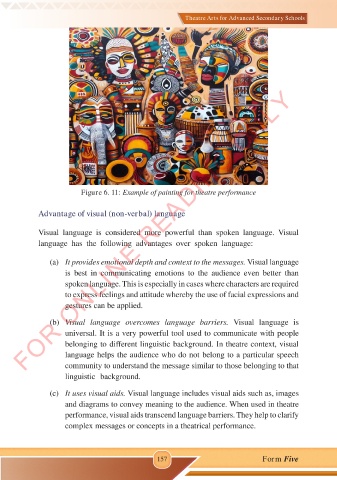
                         Figure 6. 11: Example of painting for theatre performance


            Advantage of visual (non-verbal) language


            Visual language  is considered  more powerful than spoken language.  Visual
            language  has the following advantages  over spoken language:

                (a)  It provides emotional depth and context to the messages. Visual language
                    is best in communicating  emotions  to the  audience  even  better  than
                    spoken language. This is especially in cases where characters are required
                    to express feelings and attitude whereby the use of facial expressions and
                    gestures can be applied.

                (b)  Visual language overcomes language barriers.  Visual language is
                    universal. It is a very powerful tool used to communicate with people
                    belonging to different linguistic background. In theatre context, visual
                    language helps the audience who do not belong to a particular speech
                    community to understand the message similar to those belonging to that
                    linguistic  background.


                (c)  It uses visual aids. Visual language includes visual aids such as, images
                    and diagrams to convey meaning to the audience. When used in theatre
                    performance, visual aids transcend language barriers. They help to clarify
                    complex messages or concepts in a theatrical performance.


                                               157                             Form Five


                                                                                          28/06/2024   15:05
   THEATRE ART F5 fnl.indd   157                                                          28/06/2024   15:05
   THEATRE ART F5 fnl.indd   157

